The Elusive 'Scorigami'
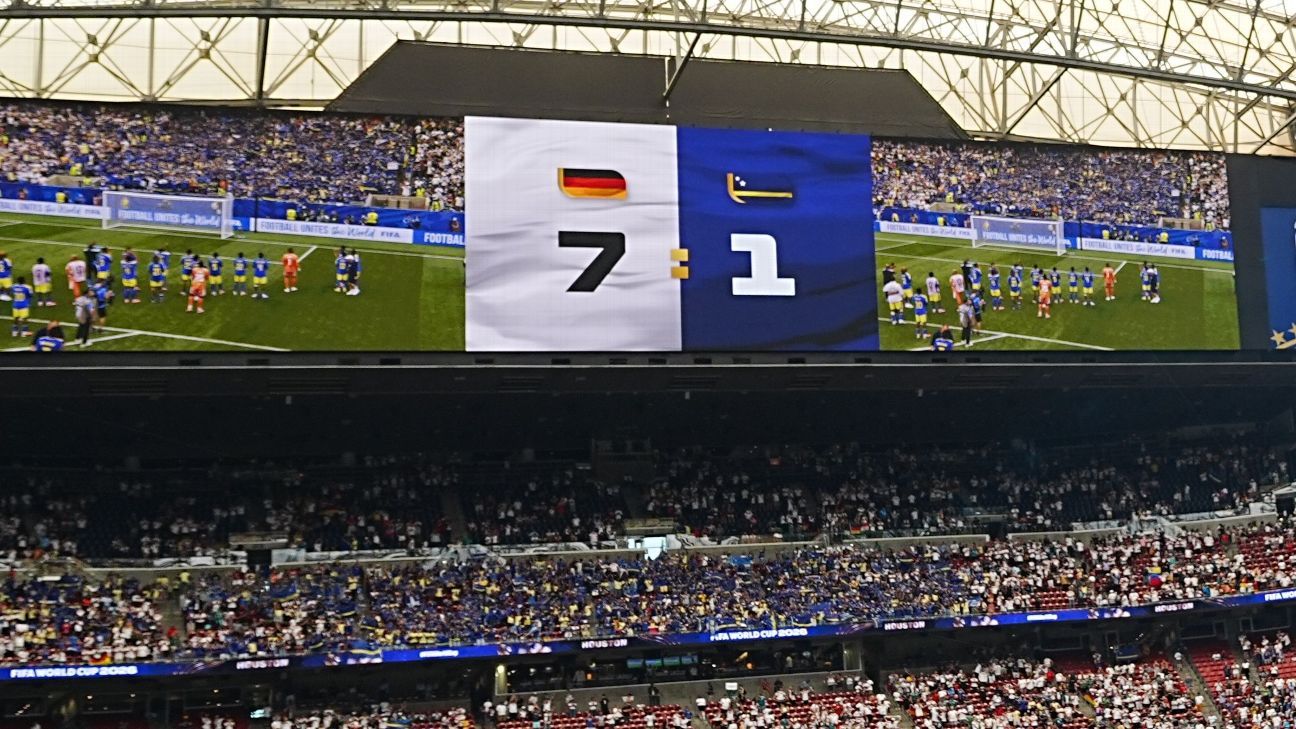
In the realm of sports statistics, a 'Scorigami' refers to a final score that has never occurred in the history of a particular league or competition. It's a rare and often celebrated event, signifying a unique outcome in the sport's record books. Recently, Germany's national football team approached this unique milestone during a World Cup fixture, a moment that garnered attention among sports enthusiasts and statisticians alike.
What is a Scorigami?
The concept of Scorigami originated in American football, popularized by Jon Bois, and has since expanded to other sports, including soccer. It tracks every unique final score in a sport's history. When a game concludes with a score that hasn't been recorded before, it's dubbed a 'Scorigami.' This phenomenon highlights the vast number of potential score combinations and the relative rarity of truly unprecedented outcomes, especially in established competitions like the FIFA World Cup.
Germany's Near Miss
While the specific details of the match in question were not provided in the original context, the implication is that Germany was involved in a game where the scoreline was poised to enter the annals of World Cup history as a unique result. The fact that it was described as 'nearly' happening suggests that the game's final moments or a particular goal or lack thereof prevented the score from being truly unprecedented. Such moments are often discussed by fans and pundits, as they represent not just the outcome of a match, but also a statistical anomaly within the sport's extensive history.
Source: Original Article